You are currently browsing the category archive for the ‘SA artists’ category.
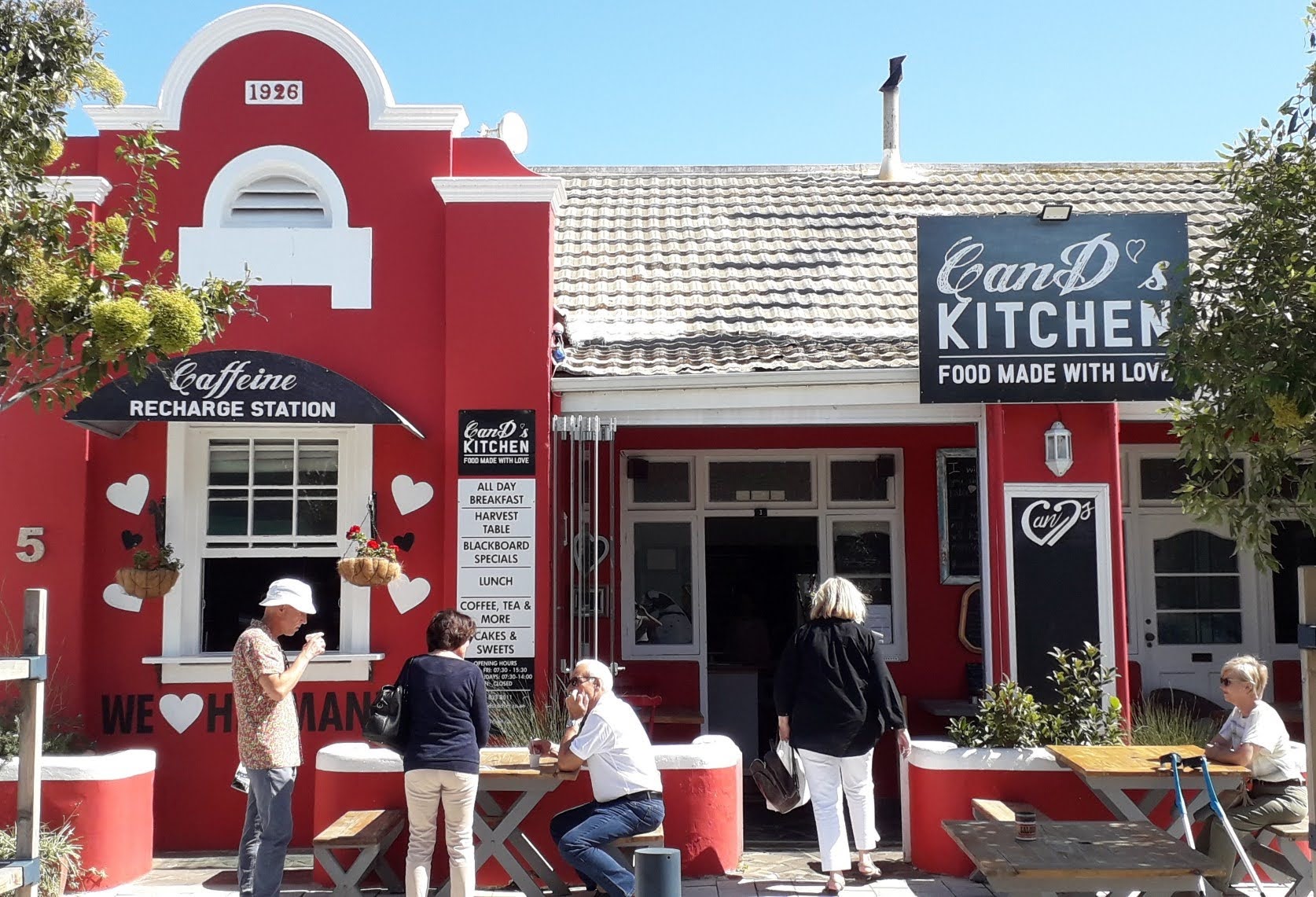
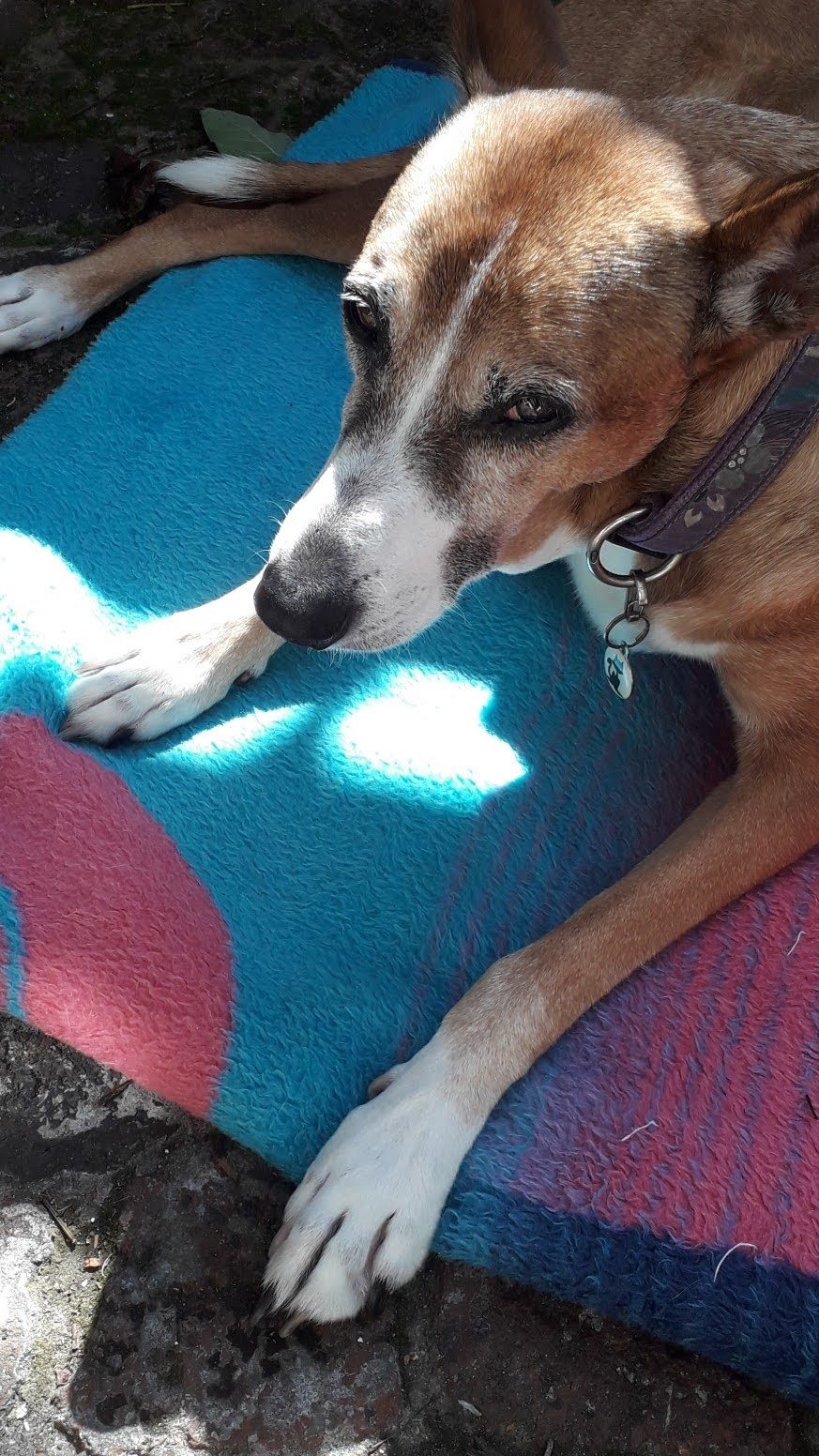
Our thing on a Saturday morning – or any other day really – is to have a little breakfast at our favourite spot in Hermanus called Cands. Well, today is Human Rights Day, so that means breakfast, right? One street up from the main road, Cands gets tourists, but it is mainly us locals here today. We know good food (and good prices) when we see it. Outdoor tables overlook the pedestrian – friendly street and inside there’s a peaceful vine – covered courtyard. The dappled sunlight in there is just right for the old bones of our Lulu, who has the run of the place.
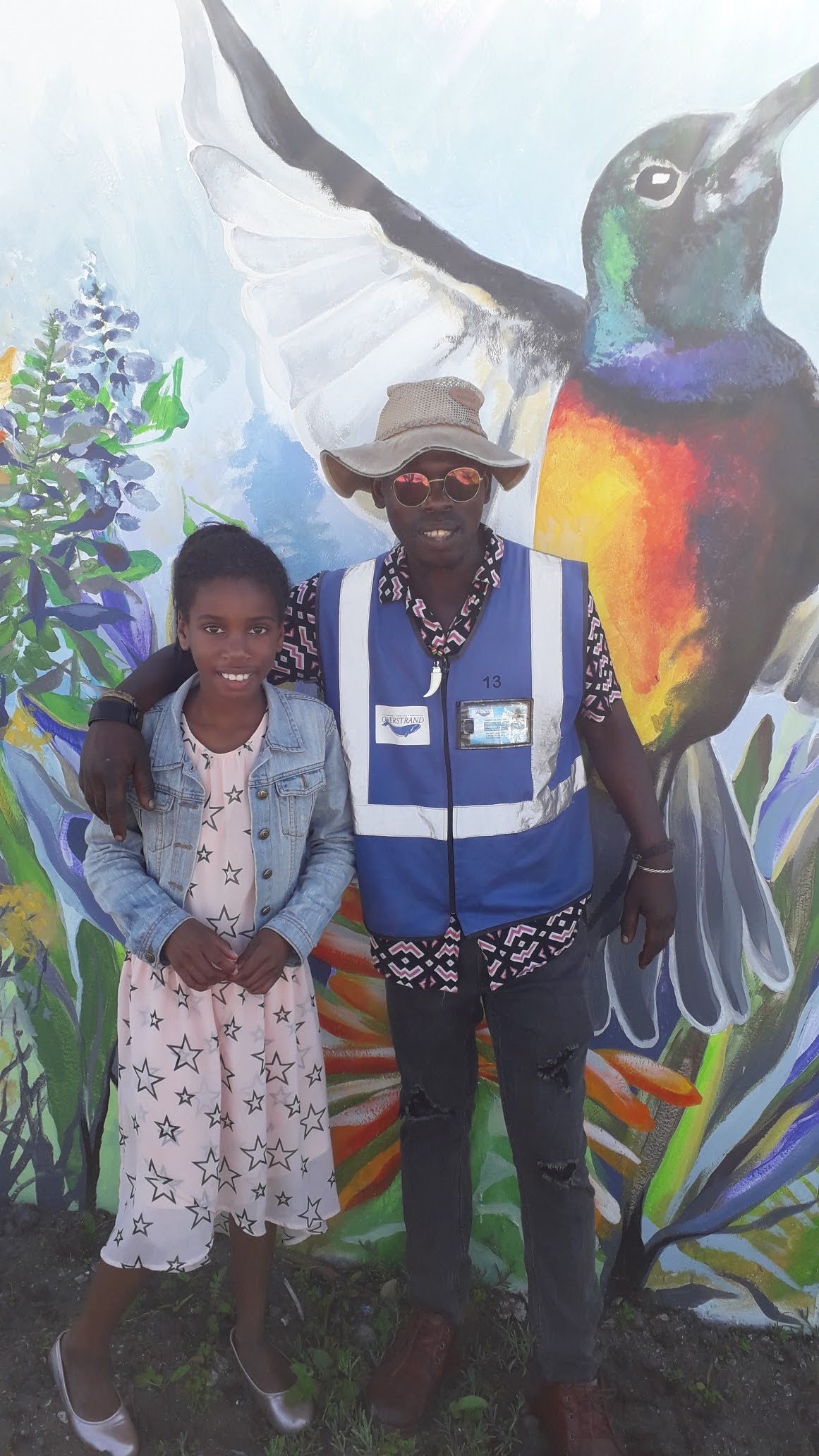
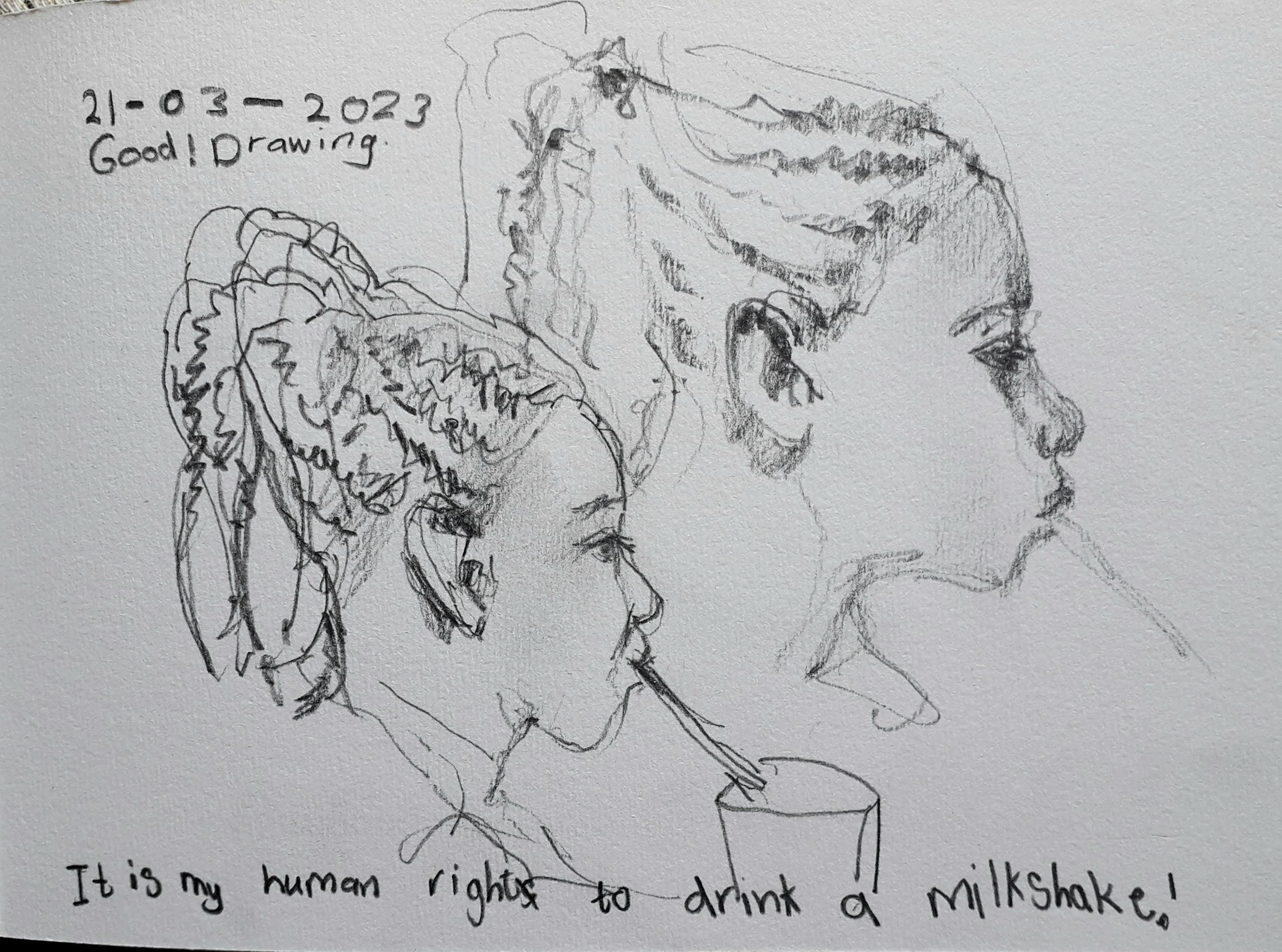
Today we’re having breakfast with young Emma, who astutely chooses a Vanilla milkshake and a toasted egg and cheese sarmie. After ordering, we nip around the corner with Lulu. We walk past a superb mural by local artist Jeandre Mariner. Tourists are posing in front of it and taking selfies – all part of the virtuous upward cycle of a small pothole – free town. My mate Owen is at his post, gathering bucks from parked cars. In theory, the parking attendant is supposed to ward off car thieves and the like but actually there’s none of that going on. I give Owen parking money because I enjoy his ebullient spirit and his sense of style. Today he wears new shades and a shark tooth necklace. He readily strikes a pose with Emma in front of another Mariner mural.
Back at Cands, our breakfast is delivered to us by the ever – cheerful Gary, who is sporting splendid new braids.
“But boys don’t wear braids ” says Emma.
“Oh, and why not?” replies Gary, gently erasing from her mind a gender sterotype.
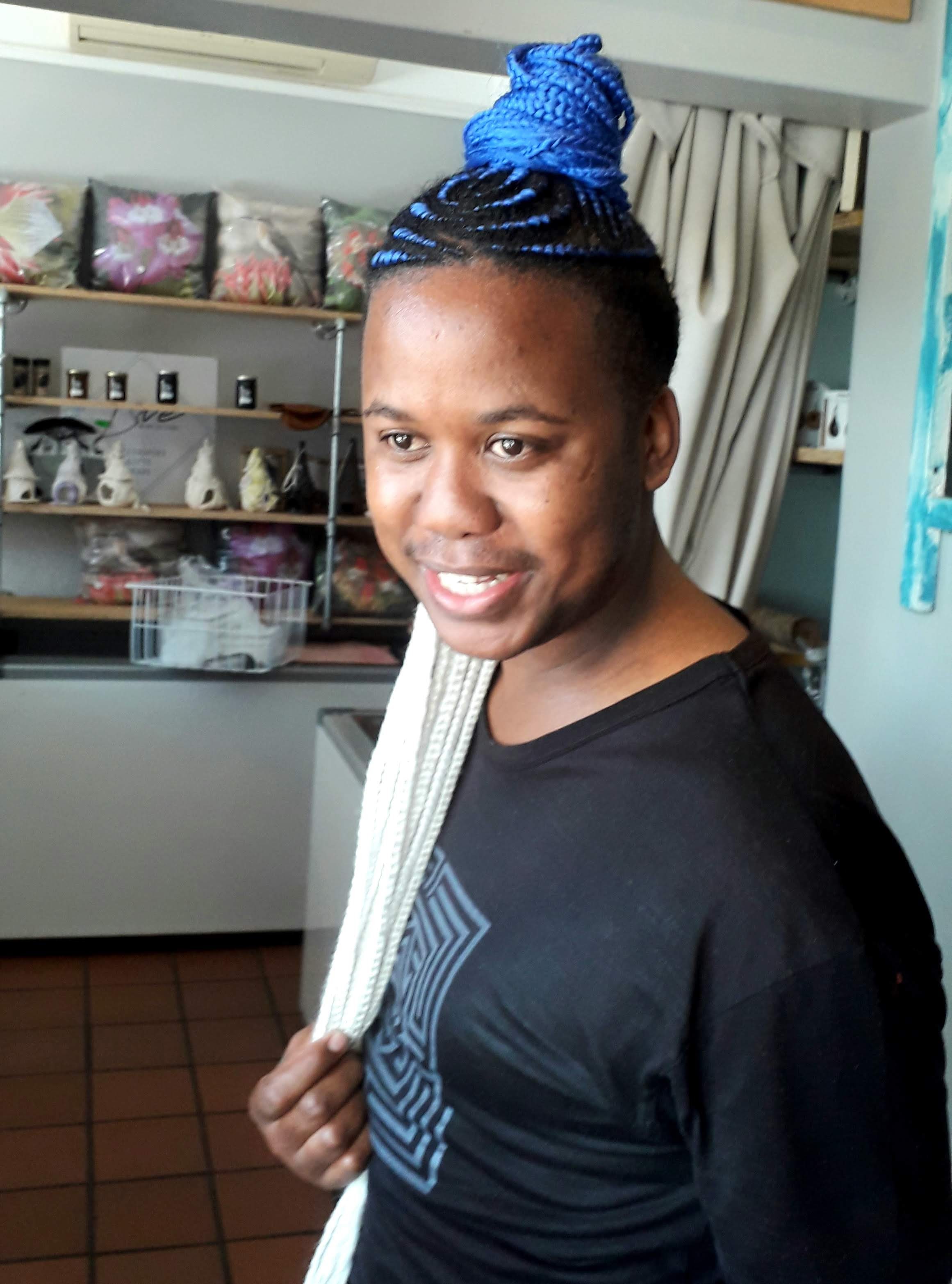
I do a little drawing of Emma sipping her milkshake. She generously declares it “good, ” and underneath it she writes ” It is my human rights to drink a milkshake!”
Who can argue with that?
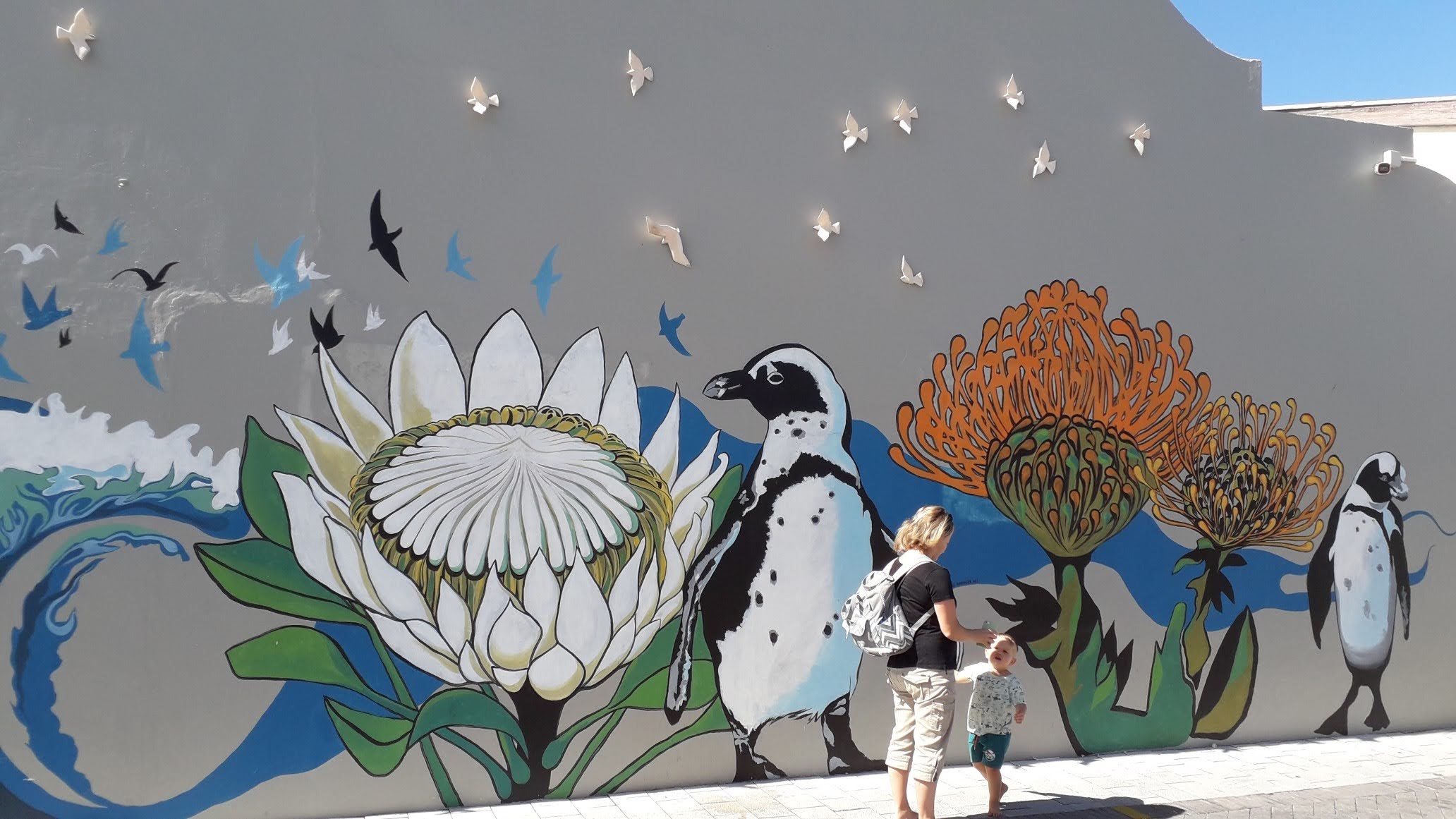
I spent the first half of the year in fruitful quest of the landscape. Then I embarked on a bumbling attempt at house renovations, skewered by the Hermanus municipal plans department. I dabbled a bit with watercolours. There were pleasant afternoons spent thus, outdoors, in winter sunlight, looking at the cold Atlantic ocean. But I soon gave up on that too. Then I chanced upon a little box of vintage drawing nibs that I’d bought twenty years ago at Cornelissen and Son, the legendary London art supplies shop.
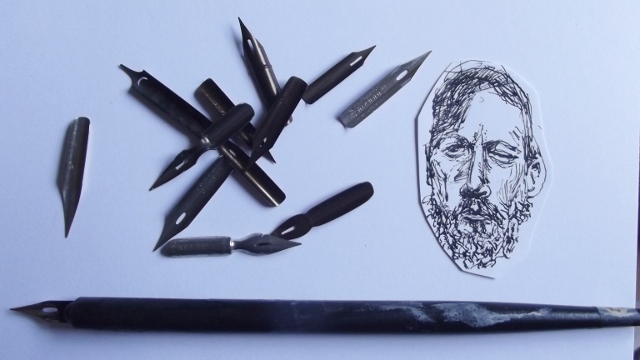
The delicate old nibs have arcane inscriptions on them, like Globe Pen, Birmingham,England, 5 , or C Brandauer and Co. Oriental Pen, No. 3 or Goode and Co, no 801, London. Used with Rowney Kandahar Indian Ink, these proved to be the thing I was looking for. Ink is emphatic and non-negotiable, no rubbing out. The mark is made, and there it is. Of course, the safe thing is to do it in pencil first, and then ink over it, making corrections as you go and rubbing out any traces of pencil that remain. But the daring thing to do is to charge one’s pen and leap right into it, and this is largely how the recent drawings have proceeded, a combination of observed and imaginary images.
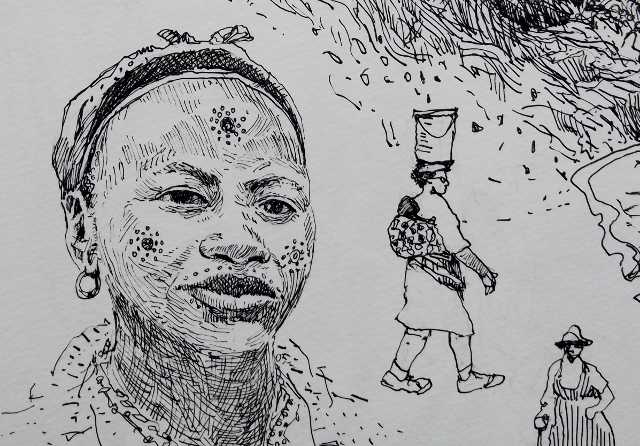
Now, as Norman Mailer once noted, dredging through the swamp of one’s mind can be a risky business. You’re painfully aware of your skills (which may be inadequate,) and your ideas (which may be silly.) It’s a bit of a roller -coaster: Burning buses one day, a vase of flowers the next. Take the detail below. First the Zulu gogo appeared, and later, having watched a clip of a student talking about a Zulu tradition of sending parcels of lightning to foes, I added the mini lightning bolt.
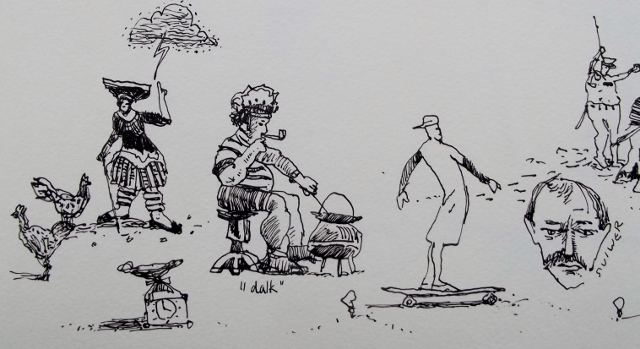
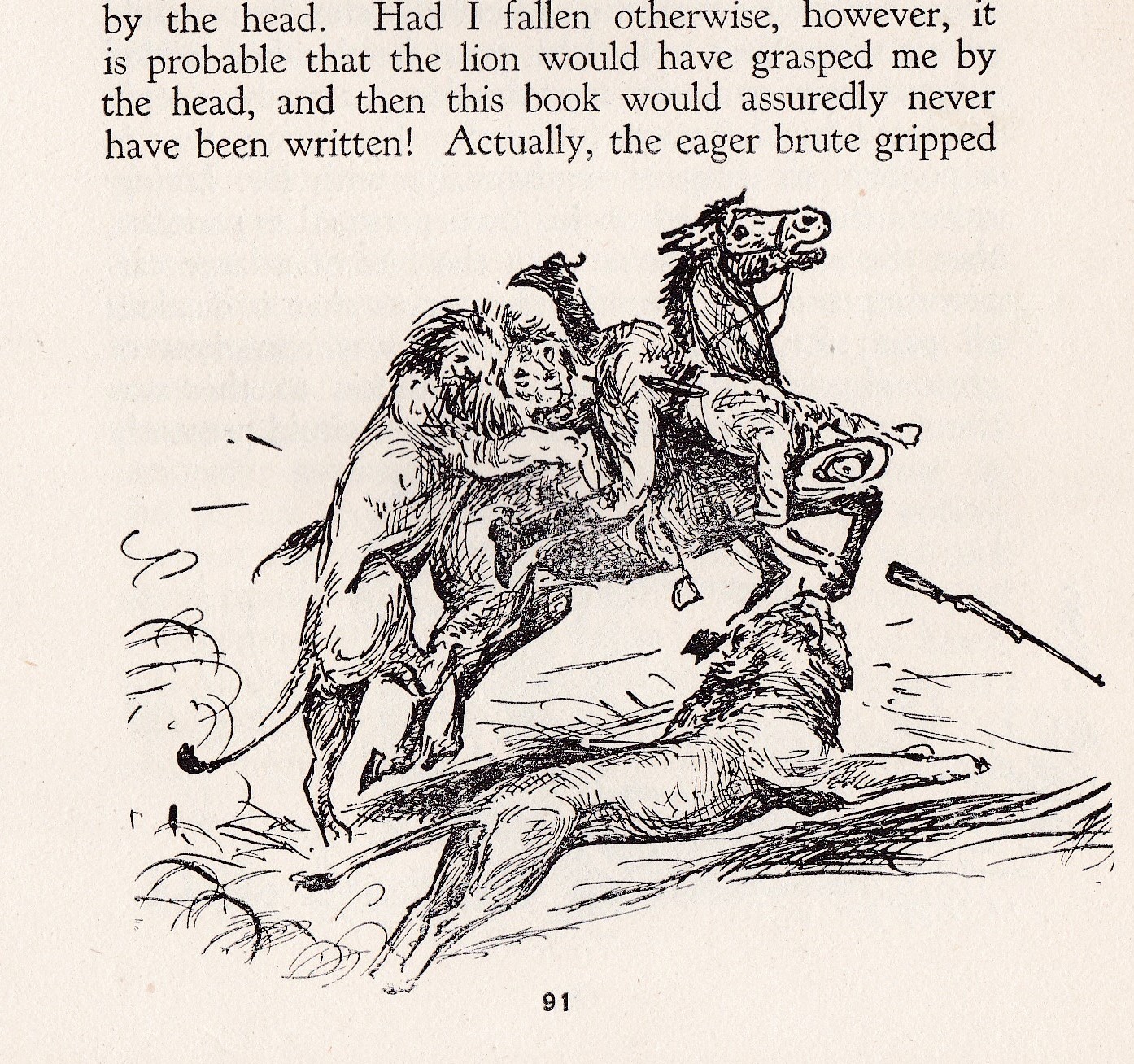
Sometimes there are little dead ends, and it may be a week or so until one knows what to add next. The solution can turn up in the shape of a newspaper picture, or something in an old book, a conversation, a distant memory. The noise of the present can find itself on the same page as the deeply recessed past. There’s no shortage of stuff that may have inflicted itself on the artist’s psyche: Picasso’s sketchbooks, Van Gogh’s reed drawings done in France. Before that, the comics section of the Sunday Express, especially Prince Valiant. All those World War two comic books (Achtung, schweinhund!) Also the illustrated books I grew up with – Like Struwelpeter, Kalulu the Hare, Barbara Tyrell’s Tribal Peoples, and Harry Wolhuter’s Memories of a Game Ranger (with illustrations by C.T. Astley-Maberly.) So I’ll leave you with this , from the Memories of a Game Ranger, depicting the part where Harry Wolhuter gets dragged off by a lion. How gruesome, how exciting! Only ink can do it!
Yes, my friends. The show at Stellenbosch opened two weeks ago. We had a good turnout and some sales. Sean o’ Toole gave us a charming opening. He read from his short story about an artist searching for Pierneef sites. The ghost of Pierneef appears to scoff at the idea, to scoff at his own paintings even. I enjoyed that. Several times, alone, quasi lost and staying in dubious lodgings, I too have felt the sniggering of Oom Henk over my shoulder.

the marathon, day 2
Hanging this show was gruelling, with a lot of archaic twiddling of fishing line and a good deal of hammering. It took Monique and I, ably assisted by one Anton Chapman, a full four days to get it looking right. After the flutter of the opening I went through to Stellies several more times and then tuned out. With my frozen shoulder hurting like hell, and clutching a copy of James Whyle’s The Book of War, we headed to the nether reaches of the Overberg.

On the pont at Malgas
Two days under the big sky at De Hoop was good medicine, but I still needed to get further away. We went across the pont at Malgas and on dirt through stony farmland to Witsand. There were jackal buzzards and blue cranes. The farmhouses were neat and well kept. Aside from a crazed Telkom van narrowly missing us at high speed, there was no one about. We could have been in the 1970s. We went on past Vermaaklikheid to the remote outpost of Puntjie, which has cottages dating from the 1890s. The fynbos was broken by tall aloes as we ascended the last hill and got to a firmly locked farm gate. Clever bastards, keeping Nirvana to themselves. Cathy and I took a picnic lunch of bread, cheese and cold wors and then turned back home…

the mythical kingdom of Puntjie

Pelser in action
Yes, it is a mere 5 months since my last posting, dear reader. I had an acute dose of blogophobia, which persisted despite the mutterings of my irascible blog coach. It took a visit from Monique Pelser to shake me out of my lethargy. We met in 2009, and by a remarkable coincidence, found that we had both been to the Pierneef Museum in 2006 and decided to follow his footsteps. It’s unsettling when someone else has also had your big idea, but we opted for co-operation rather than competition and so Pelser and I are going to be exhibiting together at the Stellenbosch University Gallery in April. Between us we’ve been to 27 of the 28 Station Panel sites, so its going to be a comprehensive show, with the photographs and paintings suggesting different ways of interpreting the landscape. The old harbour in my home town of Hermanus is one of the Pierneef sites, and Monique came out to photograph it last week.
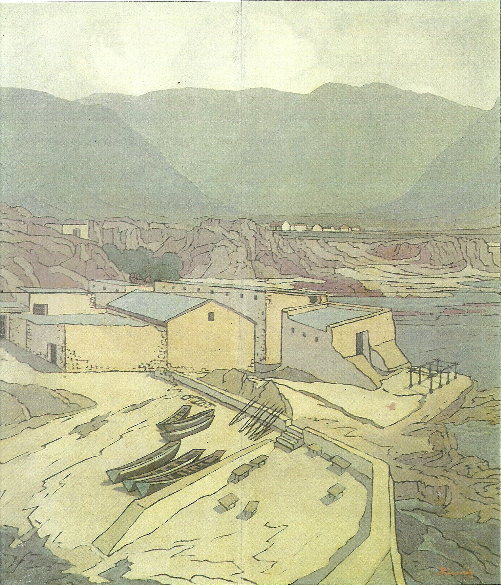
J H Pierneef, Hermanus 142 x 126 cm. Oil on canvas
You’ll notice how Pierneef enlarged the buildings. He took a close up view of them and pasted it onto the view of the mountains. You’d have to be suspended in mid air to get a photo of that. Monique’s solution to the multiple perspectives often found in the Station Panels has been to use two cameras angled away from each other to give us an extended view of the sites. Painting and drawing outside, Pierneef would have spent many hours there. Today we tend to point and click and be on our way. We experience the landscape in soundbites and as a result we miss a lot. So Monique has chosen to immerse herself in the landscape. She sets up her cameras at dawn and, taking a picture every five minutes, stays at the site until sunset. These “photo sketches” are then projected onto a screen, giving us a remarkable record of a site over a day. To be viewed properly, the viewer has to give up their time, as if the photographer is urging us to put our own frenetic lives on hold to consider something bigger than ourselves. We may just find it was worth the wait.
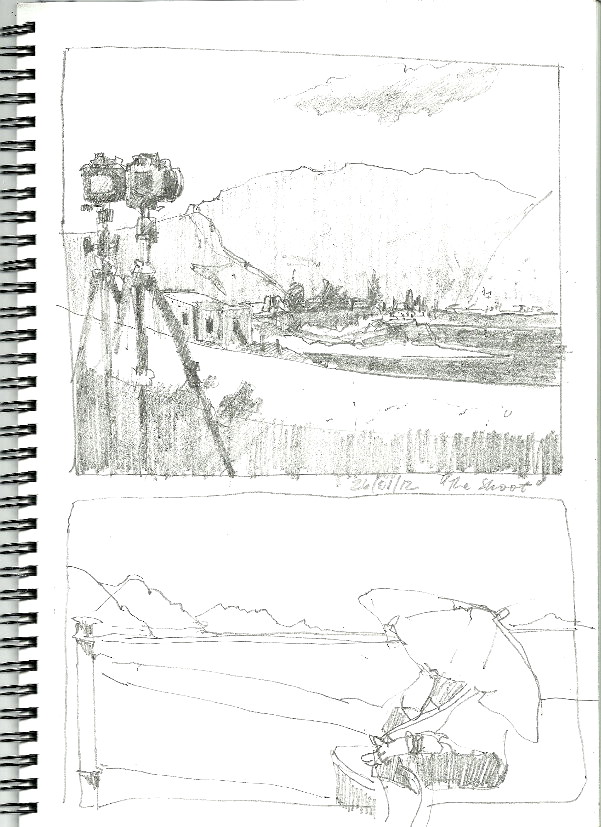
the pencil has the last word
At ten to nine on Friday morning I dropped Cathy off at Cape Town airport (soon to be renamed Zille International I believe). It was raining and the highway into town was jammed. Nothing like sitting in traffic to heighten the sense of one’s life slipping meaninglessly away. At the Langa off ramp I turned around and headed for Stellenbosch instead.
One more quick look at those panels was what I had in mind. They’re still at the Rupert Museum. The Panels are superbly displayed, and it’s good to see them in this context. I’ve looked at these things a good deal in print and real life. I’ve made painted copies of them. But I keep noticing new things, and the obsession remains. The more you invest, the more difficult to let go. My visit had overtones of a pilgrimage: the painter kneels before the holy relic in the hope that great fortune will follow.
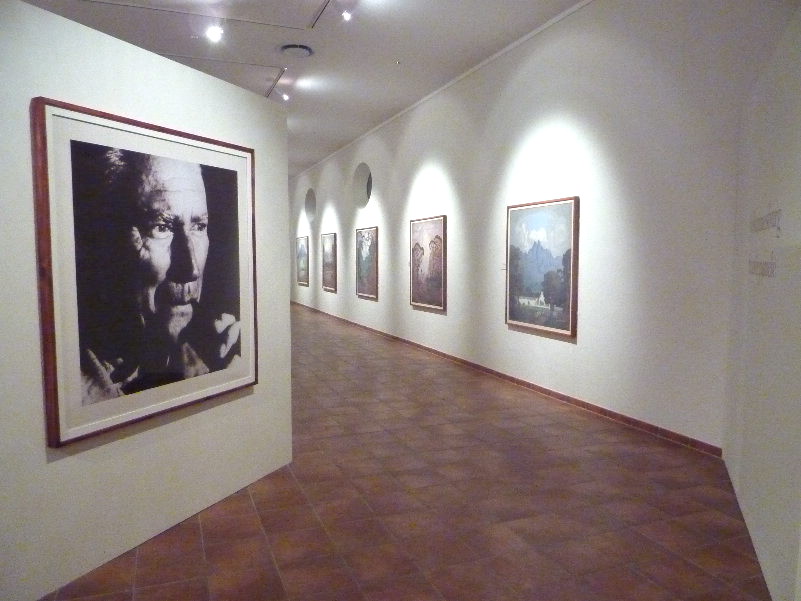
Henk at the Rupert
The Rupert Museum also has a standing collection of South African art. There are a lot of Irma Sterns. For reasons that aren’t quite clear to me, I’ve never really liked her paintings that much. Although lately I’m tending toward the idea that she’s actually rather good. As we all know, her work keeps fetching record prices on auction, and that tends to muddy the waters a bit. Are high prices the measure of an artist’s merit? Of course not. They just reflect a decision about which objects are safe investments. So who makes the decision? The chaps in the corporate boardrooms? The auction houses? Or that nefarious group of voices known only as the Art Police? They patrol the fences of our little canon, deciding who gets invited to the high table of Art.
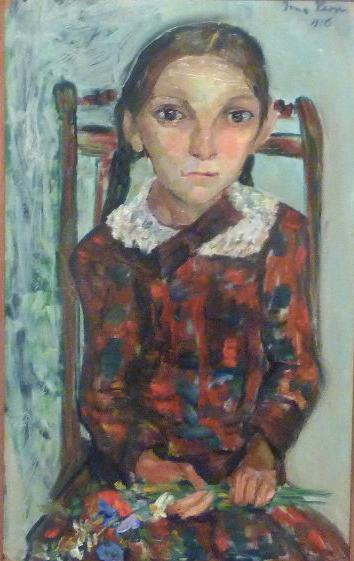
Irma Stern, Eternal Child
There are many gems in this collection, and a few duds. A lot of the work that mimics European stylistic developments just looks dated to me. Amongst all the mid-century modernism I was struck by this Nita Spilhaus landscape, fresh and unpretentious.
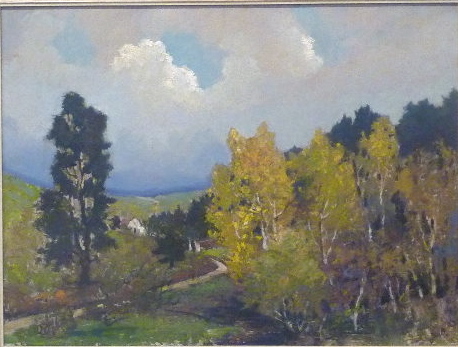
Nita Spilhaus, Tokai landscape
In my book, there are two more women painters in drastic need of re-appraisal: Ruth Prowse and Dorothy Kay. I’ve never seen a bad painting by either of them. But they stand in the giant shadow cast by Stern. Perhaps it’s time the Art Police got out their notebooks and had another look.
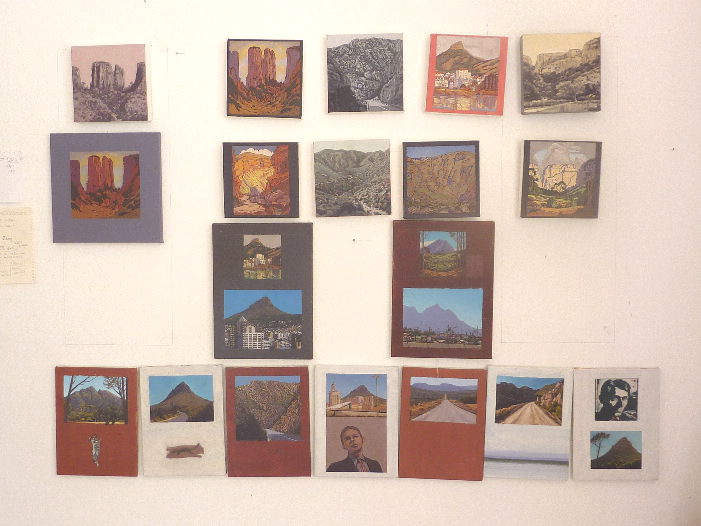
'n hele klomp kleintjies
The September exhibition date looms. Many of the chickens have come to roost at one end of the studio, quietly bothering me. The painter Simon Stone was once asked “when is a painting finished?” “When it stops irritating me ” was his answer. The business of finishing is just that, a slow burnishing away of faults.
The square ones at the top are 20cmx20cm – part of a set of twenty. The bottom row of paintings are an old standard size: 9×12 inches. They’re done on Belgian linen, made up in Jo’burg about seven years ago. At last, the right moment and the courage to paint on them! Belgian linen is the holy grail of paint surfaces (particularly oil primed BL).
Mostly, when a work goes as “oil on canvas”, it is something called “cotton duck”, an inexpensive and durable support, but not as smooth as BL. It’s only when you’re really making good money that you’ll be ordering Belgian linen from your canvas makers (as Robert Hodgins unfailingly did). Meanwhile I’ve had a bad run of it with canvas suppliers, so I’ve resorted to stretching a few of my own. For the first time in about 15 years.
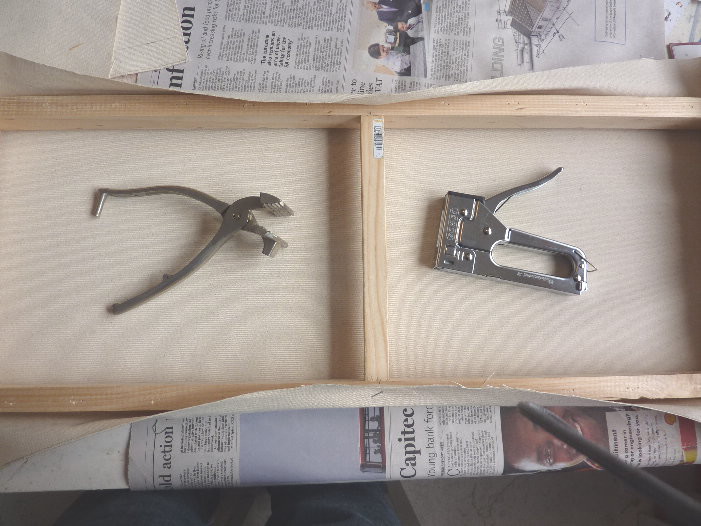
behind the scenes
You need a stapler and, unless you have a particularly strong pair of thumbs, a purpose built canvas gripper. This is a good thing to do on a Saturday afternoon. I recommend the boeremusiek programme on RSG as audio accompaniment, but that is optional. The trick is to get it stretched tight, but not too tight. You should only take tea whilst doing this. Definitely no liquor. That will count against you when it comes to the folds on the corners.
With that behind me, I still had the problem of wanting more small Belgian linen canvases to work on. (You get addicted to the feeling of the brush gliding effortlessly over the surface, you understand.) My quest took me to The Italian Shop in Rondebosch. The proprietor, Angus Kennedy, is a mine of information and an hour later I left clutching the beautifully made up 9×12 linens as well as a whole lot of stuff I hadn’t really thought I’d be buying. Like this beautiful 60ml tube of artist’s quality Cadmium Red from Maimeri. At R360 a tube, I rate this a buy. You can get through a lot of 9×12 size canvases before you squeeze out the last bit of this pigment.
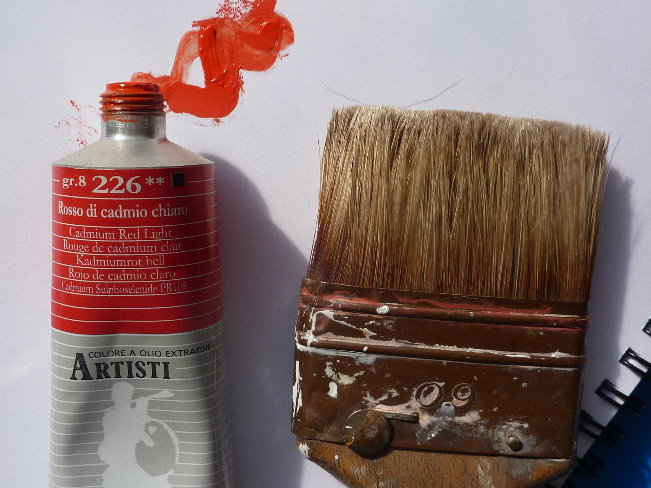
Cad Red
OK. So its been a while since I posted anything. Needless to say, my blog coach and I are no longer on speaking terms. She fired me. I told her that the pre-exhibition painting frenzy is antithetical to the idea of putting yourself out there in words, but she was having none of that. It was a lie anyway: There hasn’t been any painting frenzy. Instead, your painter has been sinking in a quicksand of incessant domestic trivia while his career slowly goes down the plug. As an antidote, I headed for Cape Town to look once more for the elusive Lion’s Head site.
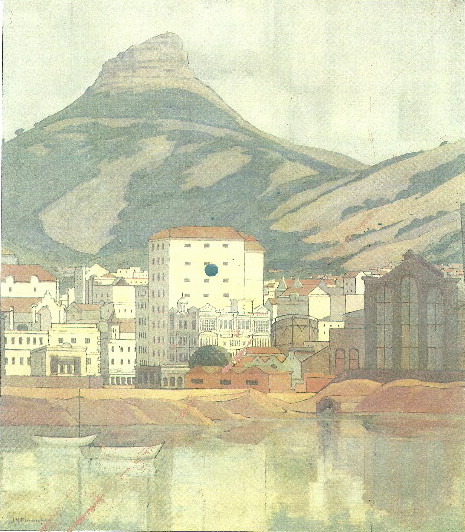
J H Pierneef. Lion's Head. Oil on canvas
My first search for this site took me near the waterfront, and I ended up in the offices of Transnet down by the docks. (Transnet, coincidentally, are the owners of the Station Panels.) A man told me that the reason I couldn’t find this site is that it no longer existed. In the 1930s this had been the Roggebaai Harbour, and it had been reclaimed in the 1940s. There is a picture of this view in reverse:
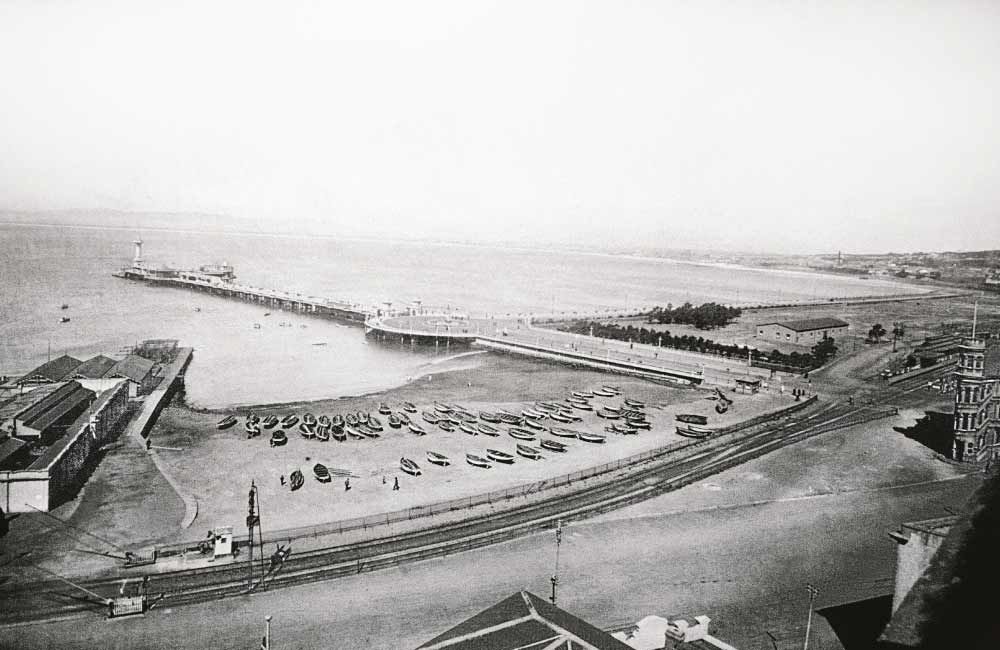
the reverse angle c 1930
Those boats and the warehouse roofs on the left clinch it as far as I am concerned. Pierneef must have taken his view of Lion’s Head from drawings done on the pier. Today this is in the vicinity of the Dias Circle, in Lower Heerengracht Road, near the monster called the Convention Centre.
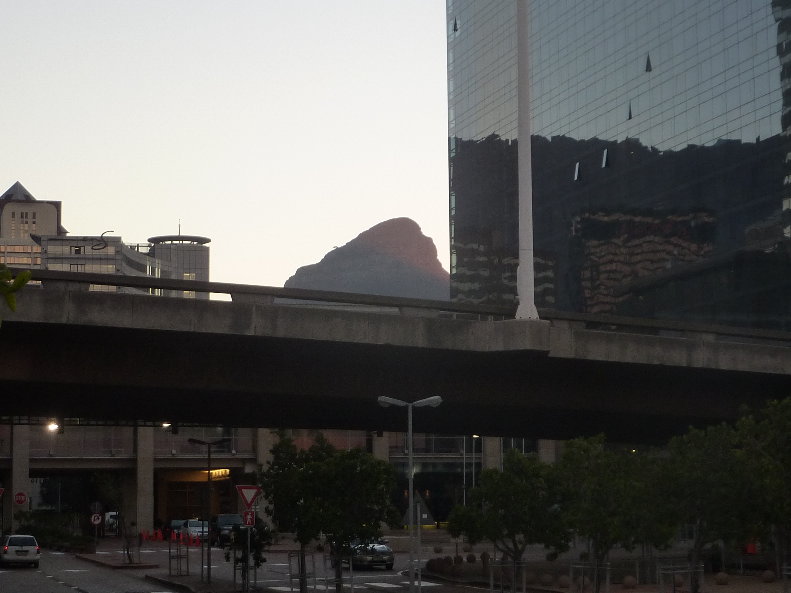
not a lot
There isn’t a lot of Lion’s Head to be seen from this neck of the woods, and although I reckon one can conjure a meaningful painting from just about anything, this didn’t do it for me. I needed elevation, and so the next day after having breakfast with my old studio china Dave Rowett, we headed for a roof. I spent a lot of time painting from roofs in Jo’burg, but this was my first Cape Town roof. The Metropolitan building stood tall in the line of sight. The security guy let us in after a few questions. “Net nie spring nie kerels, dan is EK in die kak!” We went up to the 26th floor. It was the shortest day of the year, but balmy and cloudless. The profile of Lion’s Head seemed to perfectly match the original painting. Below us stretched a jumble of Post Modernist structures, but no trace of any of Henk’s buildings. We doodled on sketchpads whilst the panorama of Table Mountain lay resplendent before us. This job is hell, dear reader, but somebody has to do it.
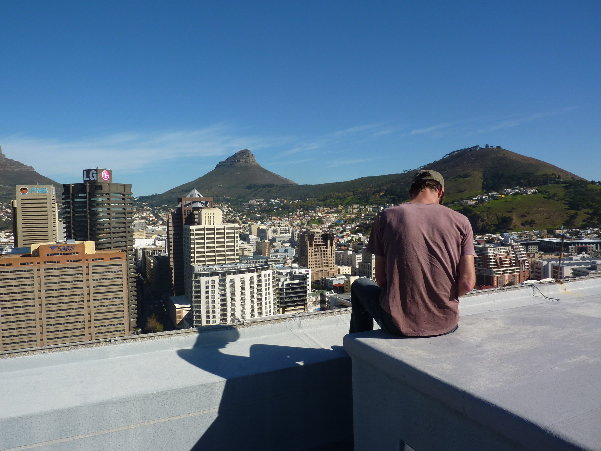
Damaraland Dave on the 27th floor
Mr Miles
Deep in the hinterland of the Overberg there is a hamlet called Baardskeerdersbos. Every Autumn and Spring, the resident artists open their doors for the B’bos Art Route. The visitor will see a mixed bag of creativity, from woodworking to pottery and quilting. The kingpins, however, are Joshua Miles and Niël Jonker, and I always look forward to seeing what they’ve been up to. Joshua Miles is now recognised as one of our best exponents of the woodcut. His colour prints of landscape and pastoral life are alluring little gems. Recently he has moved to a more monochrome spectrum. The work seems to suggest a dialogue between a very old printmaking technique and its modern cousin, the digital image, where the old medium is simply far more intriguing than the new. (Pierneef, a brilliant printmaker, would have been interested.)
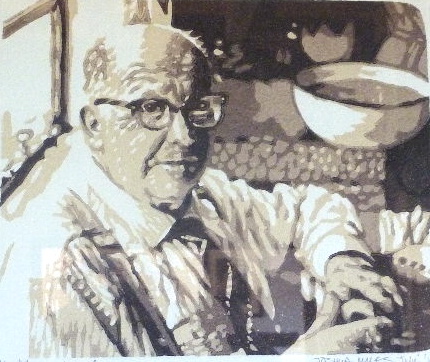
the tonal woodcut
B’bos has been in existence for many years, for no obvious reason as far as I can tell. In the late 1600s a party of sleeping explorers had their beards trimmed by scary looking spiders – hence the name. Since the artists moved in and yuppie art buyers followed, property prices have risen. There’s a division of sorts between the new and old inhabitants, who can still be seen around town on their donkey carts. They looked friendly, but I moved quickly on because as a teenager I saw Deliverance and I know how nasty those hillbillies can be .
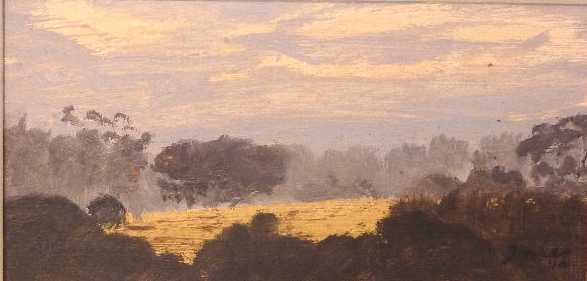
the moment captured
Niël Jonker has been painting the Overberg region for a few years now. He paints outside, on the spot. This takes some courage. Once you’ve found your site and set up your kit, you find your subject changing with the light. You have to work fast, there are flies buzzing around you, it’s hot, and the wind keeps blowing sand into your palette. Strange then, that this difficult and noble business has come to be seen as the domain of the amateur. (What serious young art student would be caught en plein air with brush in hand? Uncool!) Mr Jonker, who makes a mean loaf of ciabatta bread, has recently turned his hand to sculpting. The bronzes in his garden suggest a significant talent there too.
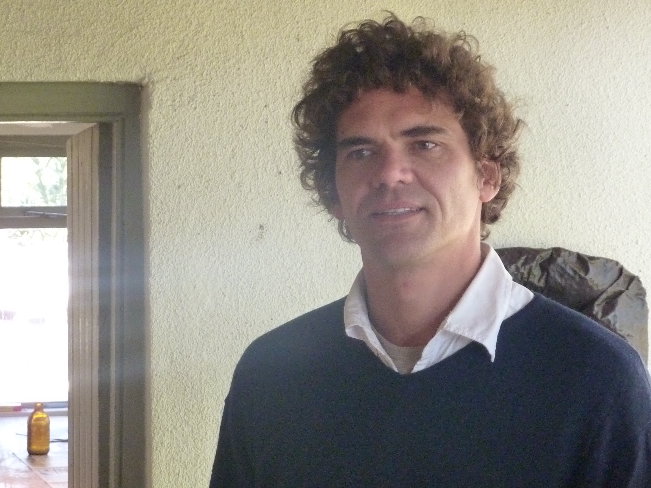
Mr Jonker
In an artworld full of hype and commercialism, the B’bos Art Route offers a glimpse into a rare authenticity. These artists are committed to place and practice – and their homes and families are evidence that they are thriving. Vorentoe, B’bos kêrels!
Early Autumn is harvest time in the Western Cape. We set off to the Solms-Delta Oesfees in Franschhoek. We went around the big mountains with young Lulu on the back seat. As we pulled into the Tokara wine estate for a snack, Lulu spewed up her breakfast. Hoping to find a dustbin nearby, I headed off past the well heeled diners on the patio, carrying a Checkers packet full of dog vomit. There was no dustbin outside or in the hyper chic interior. I ordered a muffin from the sleek haired waitress, unable to ask for assistance. Clutching a heated muffin and the Checkers bag I wandered back outside to Cathy and Lulu, who were huddled amongst the olive trees, near our battered old Polo. Talk about lowering the tone, ekse.
In Franschhoek we stayed with our painter friend Kerri Evans. She first showed at the Everard Read in Jo’burg about 15 years ago, when she was living in India. Her portraits of Indian people were beautifully rendered, exotic and very appealing. The Johannesburgers voted with their cheque books and Evans was on her way.
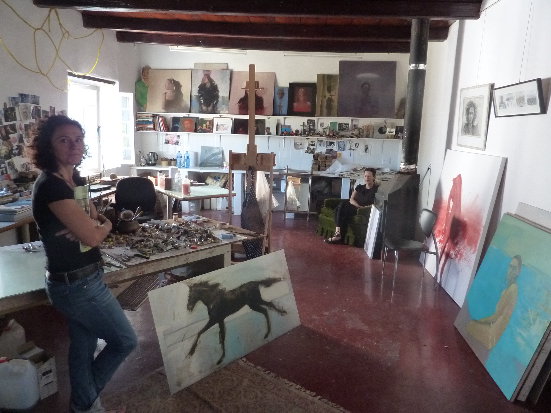
Le atelier de Evans
Evans has concentrated on portraiture and the figure. What draws you into her work is the sheer painterliness of it. One knows, looking at an Evans portrait, that this is a likeness – often meticulously rendered – but at the same time there’s a looseness, a revelling in the brushwork and the sheer possibilities of paint. The human figure and face are a pretext, a point of departure for Evans’ real concerns, which are not unlike those of abstract painters. In abstract painting, the ‘subject’ of the work is often the process of painting itself. Scrutinise an Evans painting and you will see any number of glazes, blurrings and overpaintings: you will be looking at a record of how the thing was arrived at.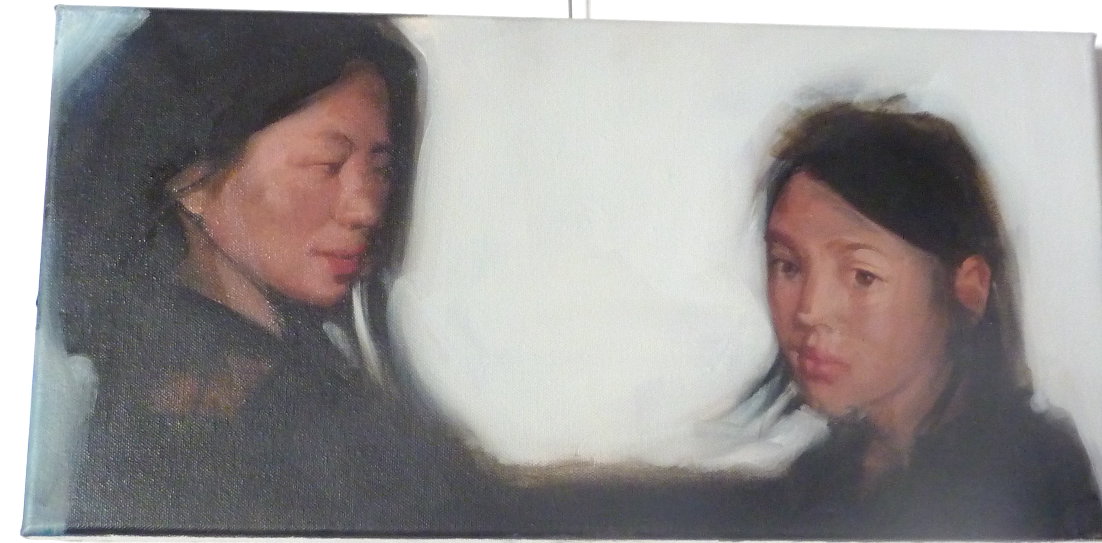
Whereas a lot of us painters make use of a grid or an overhead projector to transfer our original image onto the canvas, Evans does no preliminary drawing. Using flat brushes, the forms are laid in loosely in thin washes: after many alterations and additions the image is arrived at. For those who think Evans is a methodical kind of painter who knows a trick or two about covering her tracks, the reverse is true. She says she starts every painting not knowing how she did the last one and if she can do it again. Evans has never been comfortable working on canvas – she prefers the super smooth surface of prepared masonite and has recently discovered working onto unprimed metal sheets – a highly stable surface if ever there was one.
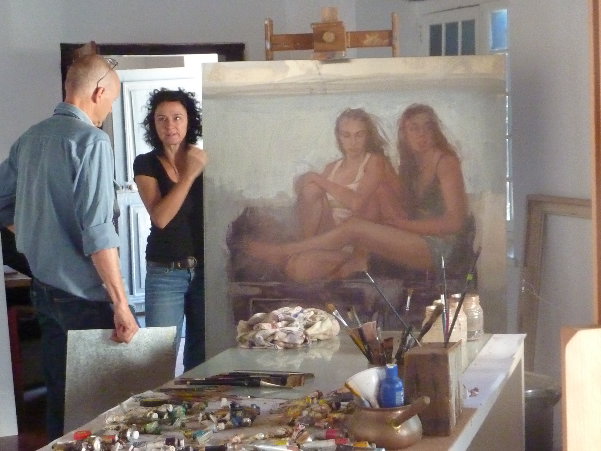
what, no canvas?
There is an awful lot of bad painting in the world, a lot of it given more importance than it deserves. Evans works in the long tradition of figurative painting. But within those confines, she is pushing back boundaries. Her work deserves to last.
Us artists are a cannibalistic lot. The myth of the lone creator rules, but the truth is we are constantly nibbling away at each other’s work, taking up bits and pieces that suit our needs. We even have a word for this polite thieving between artists – it’s called “referencing.” Referencing is complimentary: I like your idea, your brushstroke, your colouration so much that I am unable to stop myself trying to emulate it. Our peers may be hard to resist, but there is also the weight of tradition. Hundreds of years of brilliant painters to look at, all better than you. No wonder young Marcel Duchamp drew a moustache and goatee on the Mona Lisa.
In our little South African artworld, the equivalent gesture of punk outrage must surely be Wayne Barker‘s Pierneef paintings. Back in the late 1980s, Barker, fueled by alcohol and seething with righteous anger at the apartheid system, set about defiling Pierneef. He took the hallowed landscapes and inserted into them all manner of subversive imagery. Fuck you, Apartheid overlords with your nostalgic ideas of the land! Fuck you, artists who cosy up to the Nats!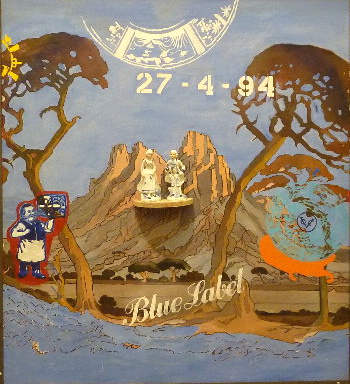
Barker’s work attacked the comfortable notion that landscape painting exists outside of politics and history. (The good theorists of the left, who had long deplored the absence of any reference to the Relations of Production in Pierneef’s work, were happy.)
Like so many before and since, here was a young artist taking aim at the establishment. But the thing about the artworld is its ability to incorporate the new pretender as well as the old Master. One may have thought 27.04.94 signaled the start of a clean out of the old white icons, an ushering in of the new. And yet, after a brief pause, the market in Pierneefs continued to rise. He is bought, studied, preserved and debated. And quite a few of us painters can’t stay away.
I took a spin to Camps Bay to look at Rose Korber‘s annual Summer Salon, an event that has been on the Cape Town art calender for the past 19 years. At Rose’s fine Camps Bay home you’ll see works by some of our trusty old campaigners (Kentridge, Nhlengethwa, Hodgins, Bell) as well as some newer kids on the block. I admit to a certain bias in favour of my guitar compadre Richard Smith, his quadrangle of works had a certain authority:

Smith interrupted by Willie Bester
The walls are packed with work, and if you’re looking for the crisp clean lines of the modern gallery, this isn’t it. What you find here are unexpected gems, and a mix of new and older work: A set of six Hanneke Benadé pastels, a 1997 Simon Stone, a fine little Debbie Bell lithograph. The Prime Minister of South African art was also strongly represented: sets of “Nose” etchings and a very fine set of new “West Coast” etchings.
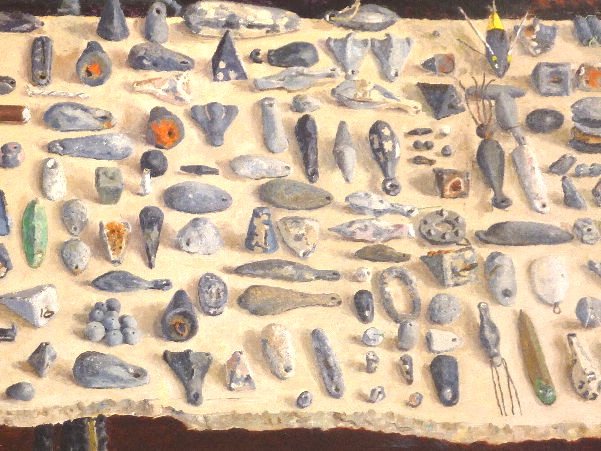
Detail, Simon Stone "sinkers"
From Mr Stone’s obsessive sinker – painting days. The thing about these paintings for me is the crazed commitment to the act of observation where the painter sets out to prove the idea that painting can transform the most mundane of things. And succeeds.
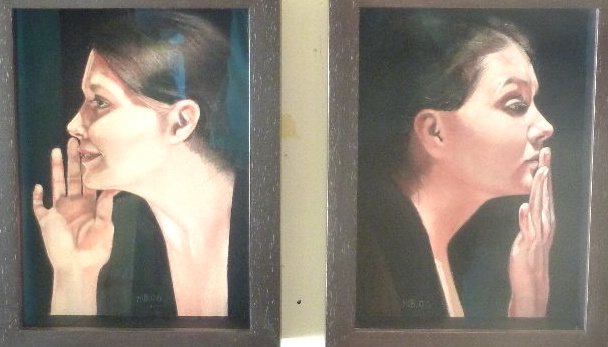
"Skinner" - Hanneke Benadé
I can never stop myself going up close to look at Benadé’s pastels. They’re so bloody immaculate! With a medium that lends itself to bright saturated hues (brilliantly used by Zwelethu Mtethwa), Benadé has moved over the years to making rich, meditative works that seem close to Seventeenth Century Dutch painting. In the stairwell there were some oils by Colbert Mashile, a young and promising painter of enigmas whom I like.
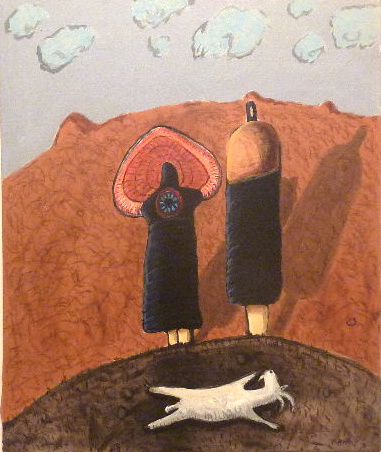
By the way, Rose told me that sales could have been better. What’s going on here, all you investment bankers? The days of stock markets are over – your money will probably outperform in art – and it’ll be a lot safer! Koop kuns mense!
Back down the N9, through Aberdeen and heading for the coast. I stop to take a look at one of those karoo dammetjies, the kind that Kobus Kloppers paints so beautifully:
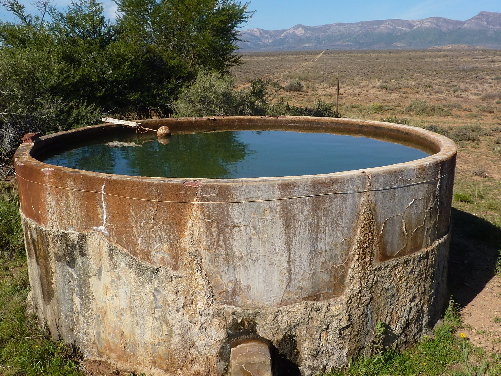
bel vir kobus
Left at Uniondale and to Knysna via the fabled Prince Alfred pass. Another one of Uberpassbuilder Thomas Bain’s creations, the pass was built in 1867 and is 80k of dirt snaking through the majestic Outeniqua Mountains. I don’t know if Oom Henk took this path on his way to paint the Knysna Heads, but he should have. It’s wild, in an Alpine kind of way. Very…um….German.
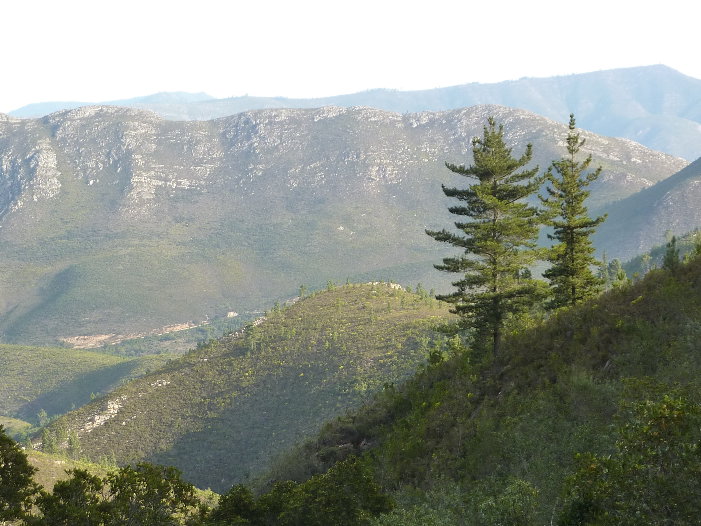
Germanicus Africana
Pierneef was the son of a Dutch immigrant to Paul Kruger’s Transvaal Republic. He spent some of his school years in Holland, and visited Europe again in 1925. He was influenced by Art Nouveau and there are links to Piet Mondrian in the flatness and simplification of planes (and the obsessive renderings of trees). You can place him in the tradition of Northern European Romanicism. While the Francophone painters of the South sought to capture the passing moment, the depressed Northern painters looked to the landscape for something lasting and transcendental. This often involved intense almost scientific study of botany and geology.
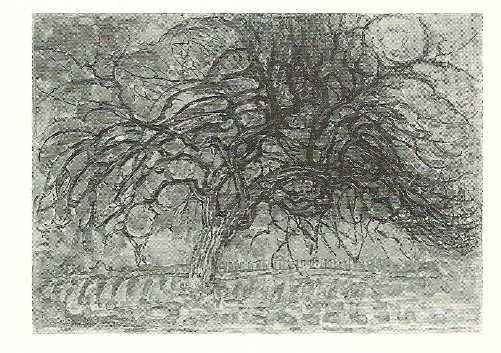
Mondrian 'The Blue Tree" 1910
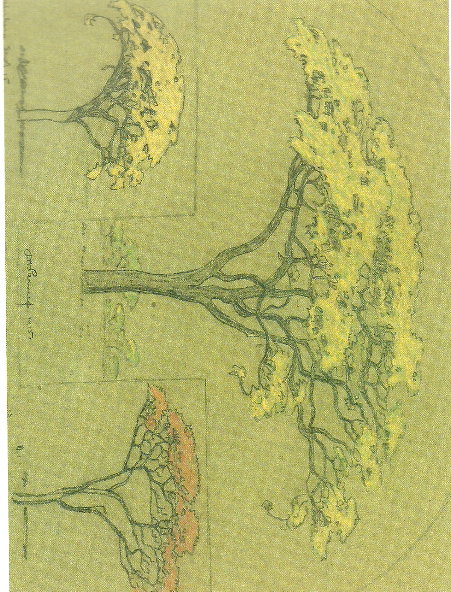
Pierneef, Boomstudies, Waterberg. 1915
After an hour of driving in honeyed afternoon light, you get into the belt of Knysna forest and the tall trees loom. I’m dozing now, tired out by all this beauty. Right at the end of the pass, some wit has left a message:
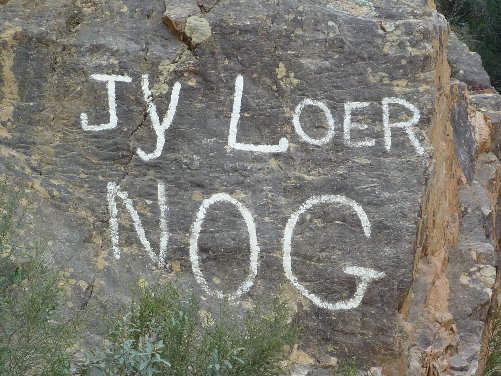
ja boet, loer is my job
A little trip up to Jo’burg is one of the reasons why I haven’t been posting. The other is that while I was there I got a rash from hell that drove me to distraction. Apparently it’s common practice for bloggers to post their rashes, but I’ll spare you that. In Jo’burg I met a photographer called Monique Pelser, and she too has been photographing the Pierneef sites. Which goes to prove that if you have an idea, you can be sure someone else is having it at exactly the same time. Monique tells me the Pierneef museum is moving to Stellenbosch. I’m trying to confirm.
If you are ever in Graaff Reinet, the taxidermist across the way from the Pierneef Museum is worth a look. They keep the main door closed though, as if to discourage casual enquiries or bunny huggers:
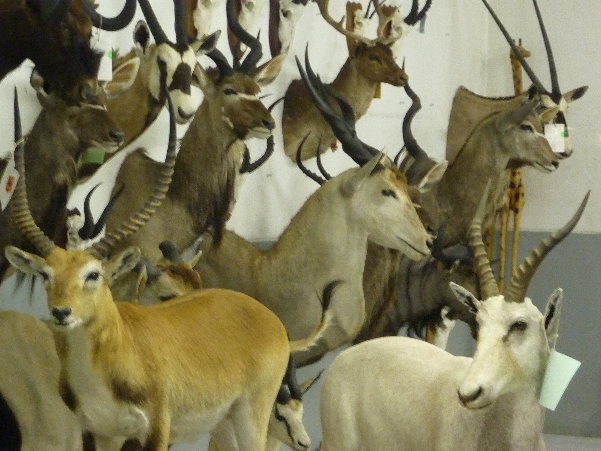
standing room only
I also encountered this bloke, who makes finely crafted greeting cards out of beads and wire.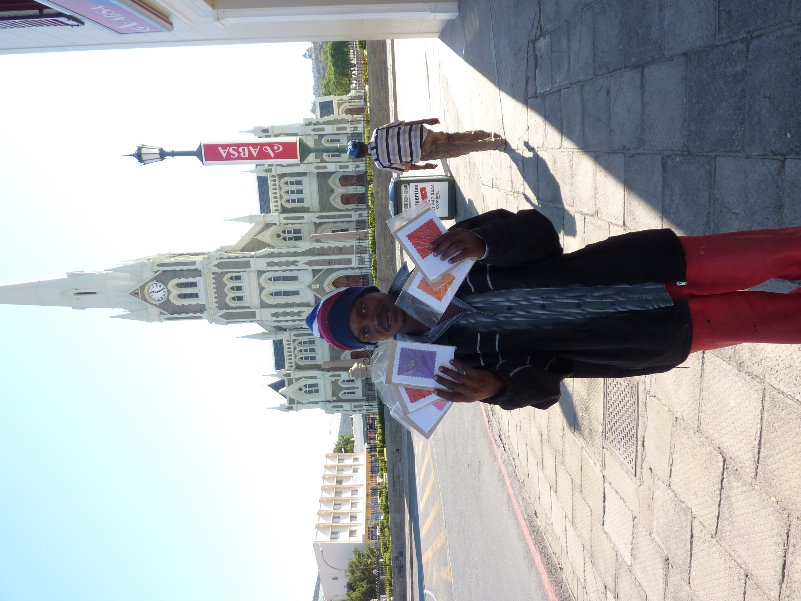
He has a congratulatory sales technique: “Well done, I’m proud of you,” he says when you buy a card. He asked me “Are you the Big Man, the one who is going to place a Big Order?” No, actually china I’m looking for the Big Man myself .
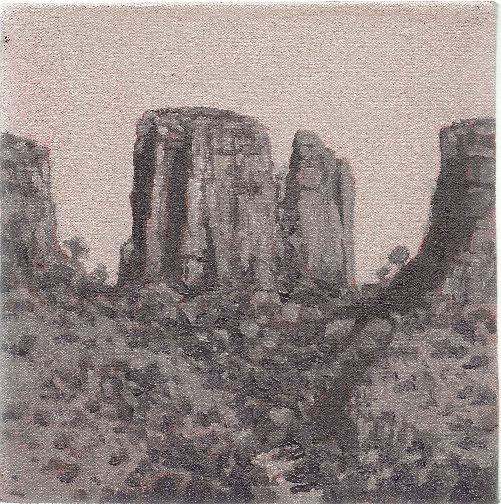
Valley of Desolation oil on canvas 20x20cm
About ten years ago Hermann, Cathy and I were going up to Jo’burg when Hermann spotted this little beastie on the right hand side of the road

The legendary Tafernaki
Made out of stone, cement and broken glass, in the manner of Helen Martin of the Owl House, it has some names inscribed on its chest, and next to it the word “Tafirnaki’. (Actually Tabirnaki.) It is situated on a nondescript stretch of road about 45ks south of Aberdeen.
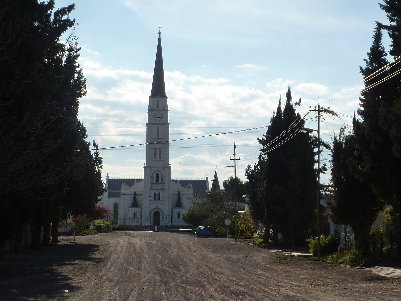
bustling Aberdeen
Those who are in the habit of asking questions like “what is it” and “why?” will not be happy here. Better rather to make a cultish object of it and be sure to send the other initiates an sms whenever driving past.

c2001: Herr Niebuhr I presume?
Double click on photos to get them full screen size, dear reader, and you will see it does actually have FINS….
I haven’t seen my old friend George for a while but clearly the heat and pace of life in Prince Albert continues to do him good. Not too long after moving into his new house, he bought an old barn across the road that is now his studio. Here he cultivated a true Karoo garden from cuttings acquired on his daily walks through the veld.
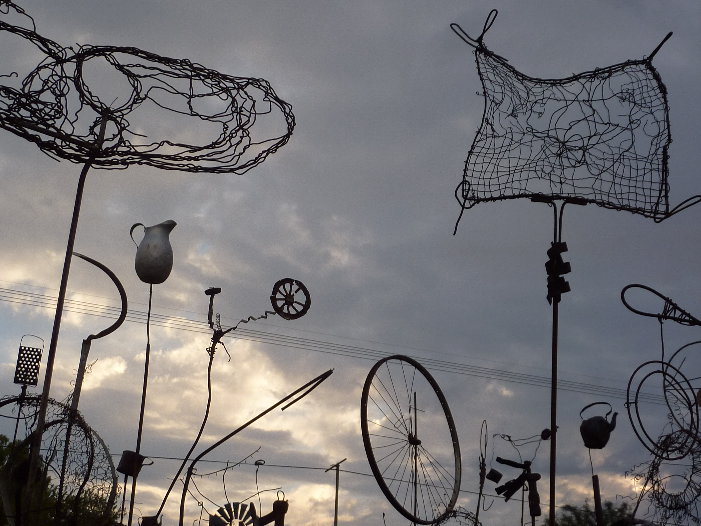
the waterwise karoo garden
One is confronted by hundreds of discarded metallic items, some of them domestic objects, others of baffling provenance. Some have retained their original identity, others have been combined to make surprising new forms. The installation continues….
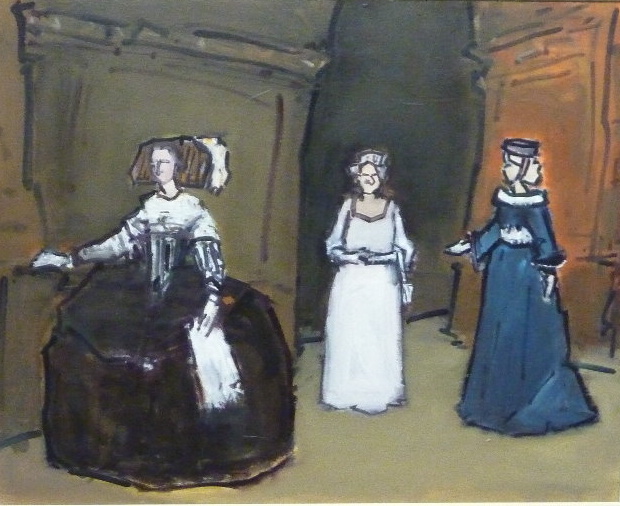
hot off the press
Inside, George is applying the finishing touches to a small canvas. Its called “Barbie meets the Queen.” That would be Barbs on the right, HRH in white and a terrifically grandiose damsel on the left who may have just exited a Velasquez painting. Is she the real queen? What’s going on here? I forgot to ask while I could. I was too busy admiring the silky washes of paint and the deft economy of line. In his world, figures from the Old Masters or 1960’s comics may find themselves in the jungles of the Congo as he wryly revisits his colonial youth. And with charcoal in hand, George has few peers. If you want to get a Coutouvidis, you have to make sharp. They sell out of the Prince Albert Gallery as soon as he delivers them.
So there’s no site. But I’ve got a tea date with George and Sheila Coutouvidis and I start the downhill glide. Its 20 kilometres of downhill all the way to Prince Albert. I took the bicycle ride down a few years ago. You pay a guy in PA to take you up in his shiny Toyota. {Make sure your bike brakes are in good working order.}
This is what I’m looking for:
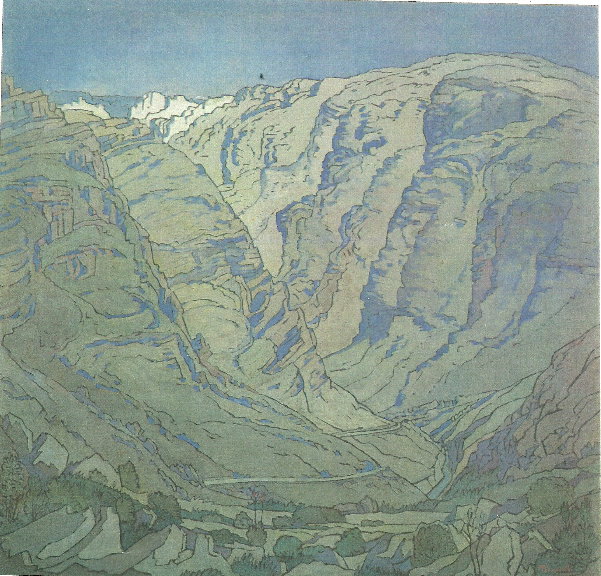
"Swartberg Pass" J H Pierneef c 1930
It’s not one of his best panels. We get a sense of the size of the mountains, but there’s no drama here somehow. There’s a lack of illumination, no light source. The key to finding the site is the road of course. It curves around two hills, and there’s a hint of a river just off to the right. I’m halfway down the pass already and I happen to glance to my right and there it is:
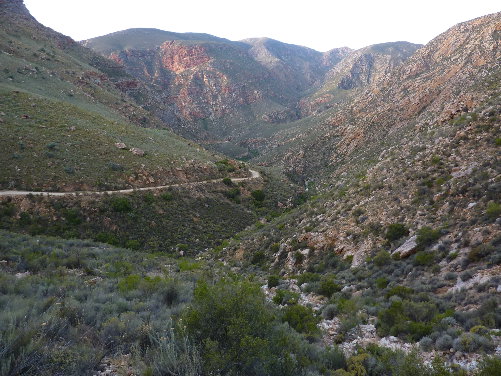
at last!
I stop the car and let out a yell (as one does when finding a Pierneef site.) I’m in exactly the right spot. It’s about 3.30pm and there’s no direct sunlight anymore. That explains the lack of light too. Fantastic. But now I’ve got to go and have tea with George and Sheila. (Double click the pic and you should be able to see the second curve of the road clearly.)
I’m padding through to the kitchen to make my morning tea and under the kitchen table there’s a heaving and a slithering thing heading away from me towards the bathroom door where it thrashes for a bit before finding its way underneath. I calmly seal the door before noticing I’m sweating. Then I go looking for the town’s snake catcher. A guy called Gerhard offers to shoot it. I still don’t know exactly what type of snake this is, so I head to my painter friend Diane McLean who tells me what to look for. And then I get a good look at it through the bathroom window.
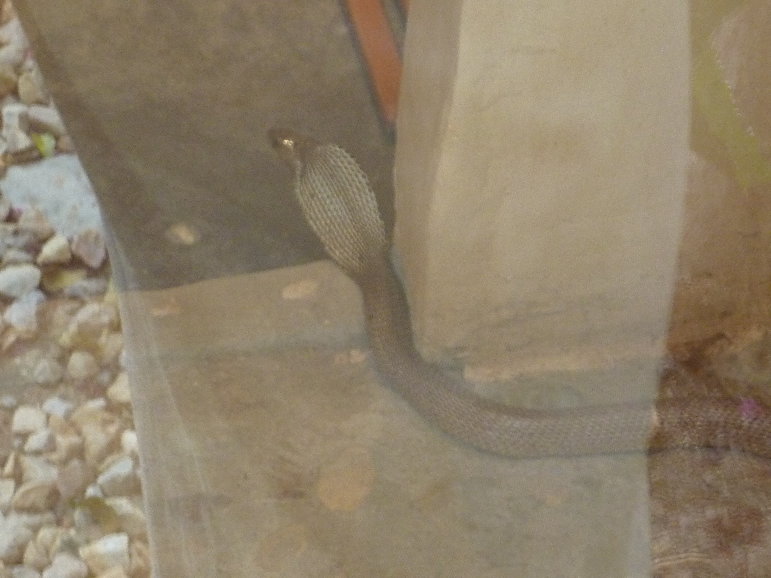
gooie more suid afrika!
After quite a few calls and a flurry of sms to Hermann (there’s a cobra in the bathroom! Qrtrfgtr! Sit tight! Don’t let those fuckers kill that snake!) I get through to the Oudtshoorn Fire Department and half an hour later the okes arrive and deftly remove the snake: “Jy moet kalm wees. As jy woel, dan begin die slang ook woel .” They released it on the way back.
In the afternoon instead of going to the Poort I head out on a farm road and find myself in a kraal with some slightly haughty goats.
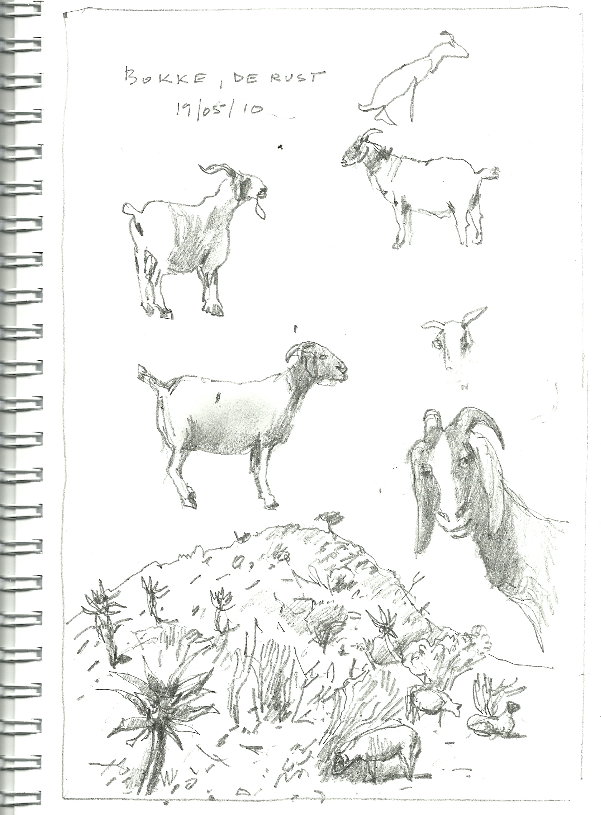
what's HE doing here?
Snakes. Goats. What the hell am I doing here? Get me to a shopping mall!
Coasting up the N2 near Riviersonderend
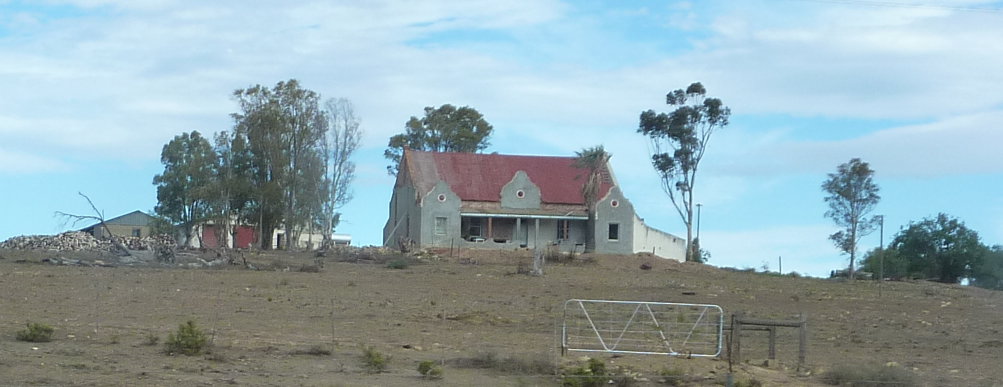
semi abandoned farmhouse
SA painter Walter Meyer put a lot of chickens in the pot painting this kind of thing. I can’t help thinking about stopping off to do a quick watercolour. But then I start thinking about the great American watercolourist Andrew Wyeth and his meticulous and chilling images of the deserted heartland (see Christina’s World 1948). Nah. Imagine having the ghost of Wyeth leering over your shoulder while you work. I’m having enough trouble dealing with Henk Pierneef, and he was a genial kind of a guy.
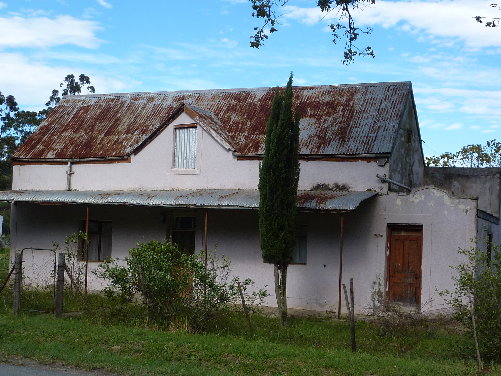
huisie in Suurbraak
Over the mountains to De Rust tomorrow to pay my respects to famille Niebuhr. Then into nearby Meiringspoort, watercolours at the ready.
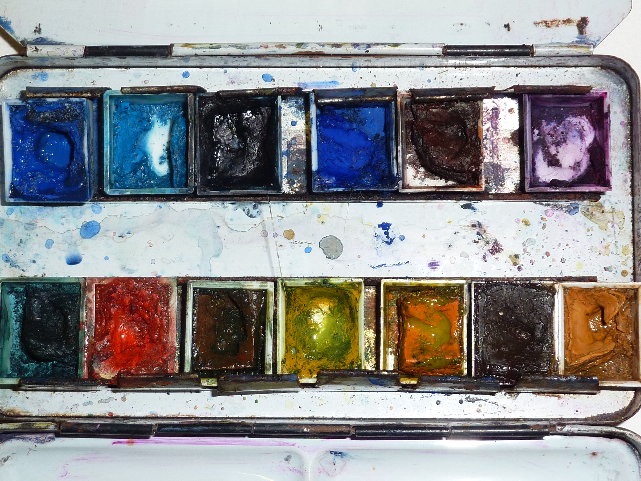
the C19th digicam
Don’t worry, I’ve got another block of Quinacridone Red (top right).
If I find an internet cafe in De Rust, dear Reader, I shall make a posting or two. Otherwise see you in about twelve days time….
I leave you in the good hands of this fellow traveler
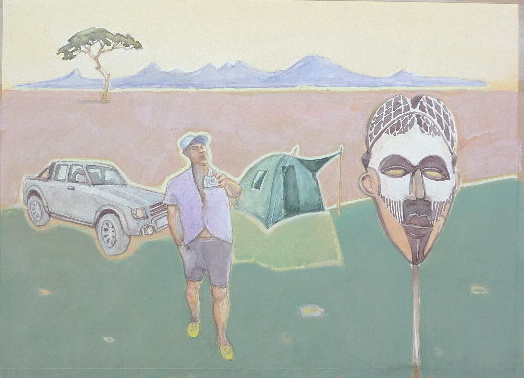
Croc man and curio. gouache on paper.
What emerged out of that was the recolouration I’d been hoping for (you don’t quite know what it is, but you recognise it when you see it.) I also lost some lekker paintings within paintings
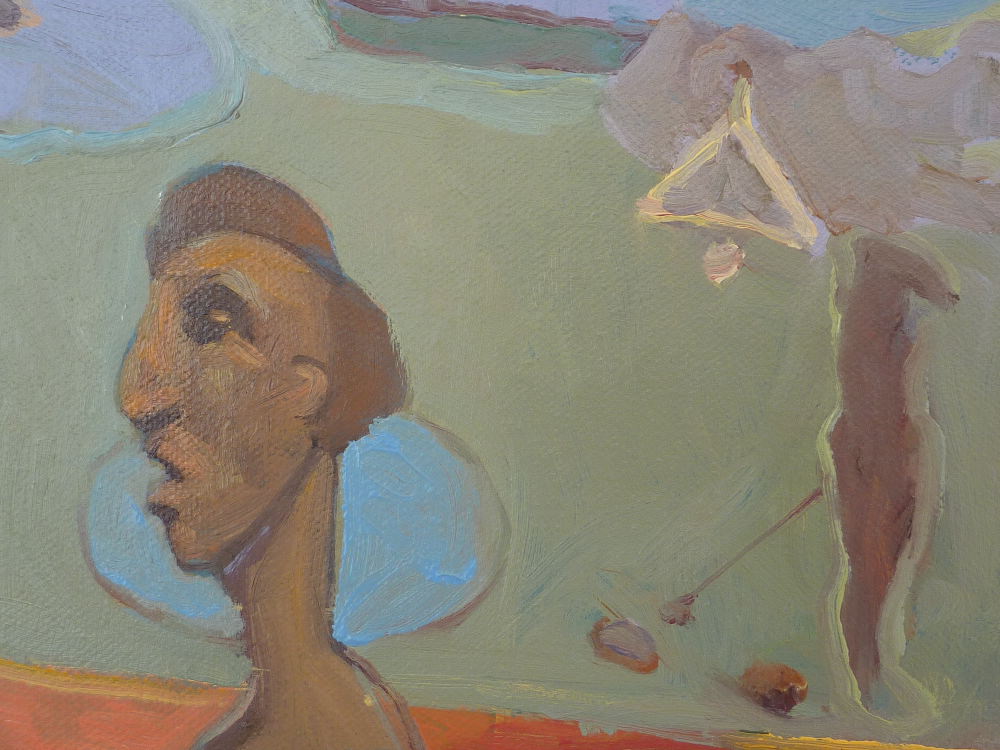
lost Picasso sculpture
Then there was the small matter of The Sea, the dreaded sea. After numerous false starts I remembered Anton Chapman‘s advice about putting down a base of deep red. He has painted a lot of sea and knows his stuff. A layer of Venetian Red and some editing decisions later:
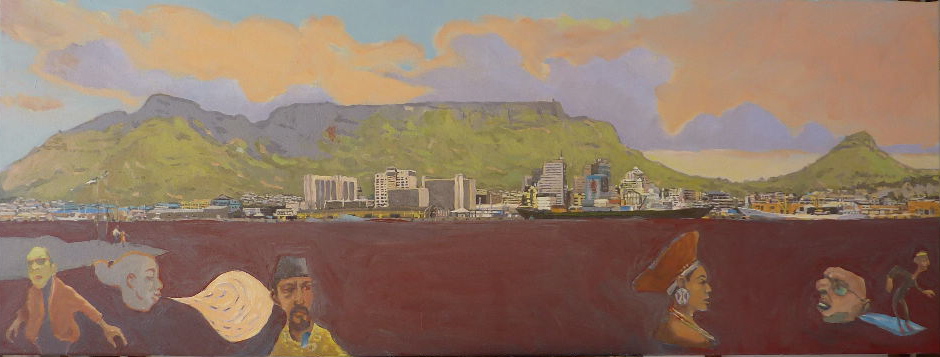
Red Sea
And after quite a bit more tweaking:
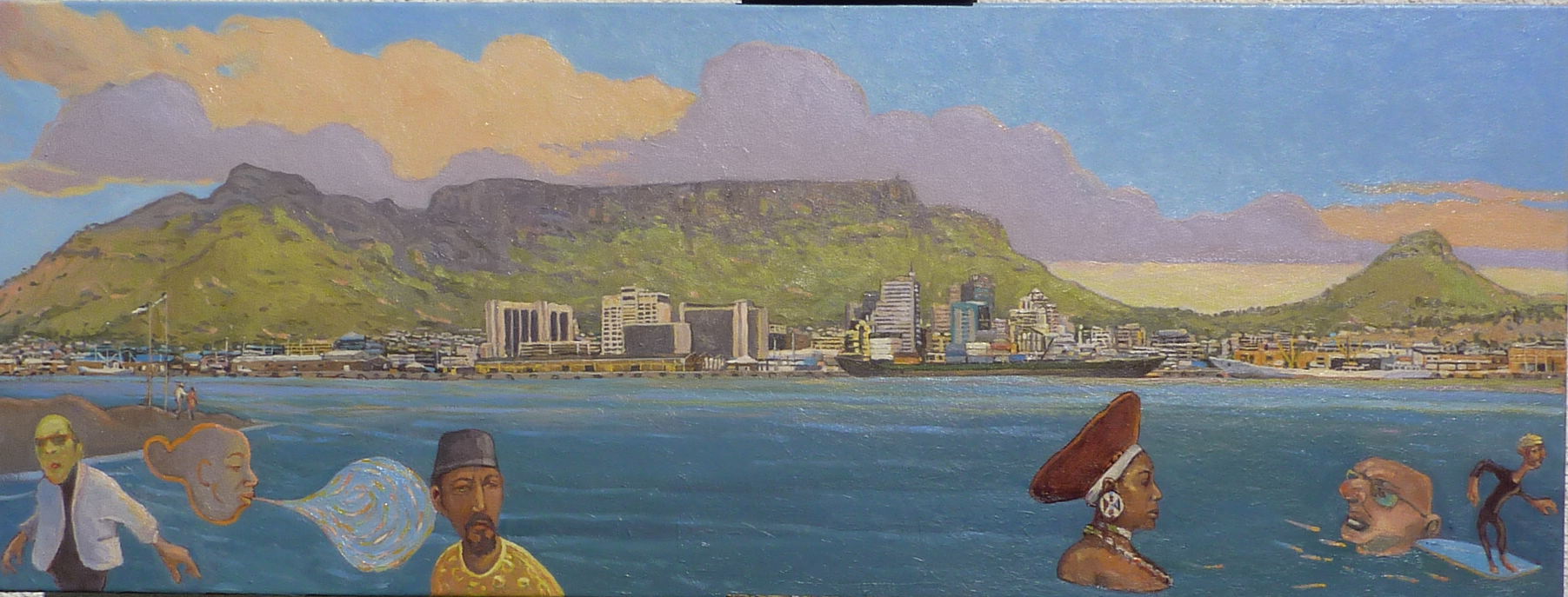
Cape Town Personae
The beast is laid to rest at last.

 Travels with Pierneef